It starts the same way it did last time. You bend to pick something off the floor, or you get out of the car after a long drive, and there it is again. Not agony. Just that familiar tightening across the lower back that you recognise immediately, because you have met it before.
You know roughly how this goes. A rough week, a few days of moving carefully, and then it eases off. It always does. And that is exactly the problem.
The pattern nobody names
Most people we see with recurring back pain describe a version of the same history. An episode a couple of years ago that settled. Another one last winter. Now this. Each time it came, each time it went, and nobody ever explained the bit in between.
This is not unusual and it is not bad luck. In the most thorough study of its kind, researchers followed people who had genuinely recovered from an episode of low back pain and checked in on them across the following year. Around seven in ten had another episode within those twelve months. Older research put the figure lower, and the honest position is that estimates vary a good deal between studies, but every one of them points the same way. Recurrence is the norm, not the exception.
What almost nobody is told is why. And the answer is not that their back is weak, or worn out, or that they are simply someone who "has a bad back". The answer is that they stopped at the point the pain stopped, and pain is the first thing to go, not the last.
Feeling better is not the same as being better
This is the single most useful idea in this article, so it is worth sitting with.
When your back settles, what has usually happened is that the irritation has calmed down. The tissue is no longer complaining. That is real progress and it feels like the finish line, because it is the bit you actually experience.
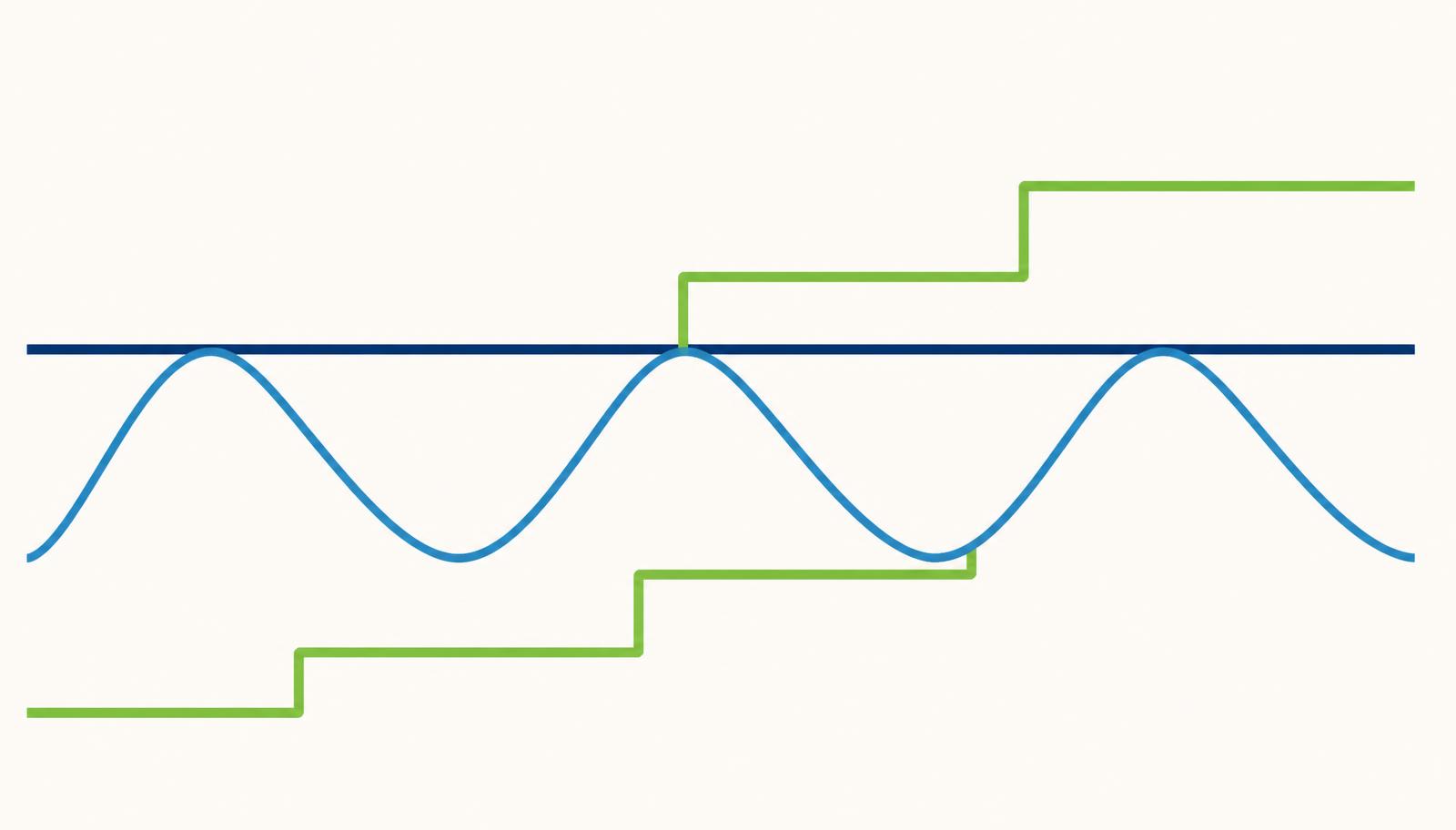
But underneath it, very little has changed yet. The capacity of the area, how much load it can take, how well it tolerates sitting, lifting, twisting or a long day on your feet, is still sitting exactly where it was when the episode started. Often it is worse, because a few weeks of moving carefully and avoiding the things that hurt will quietly reduce capacity further.
So you finish up feeling fine, with a back that is no more robust than the one that let you down in the first place. It is the equivalent of taking the cast off a broken arm and going straight back to the gym. Nothing hurts. Nothing is ready either.
Then life carries on. Eight months of normal loading against unchanged capacity, and one ordinary movement finds the ceiling. You did not do anything wrong when you bent down. You simply arrived at a limit that was never raised. Where a disc is the pain generator, that ceiling is often lower again, and needs treating directly before load can be added.
Why treatment so often stops too early
There is an uncomfortable point to make here, and it applies to clinicians as much as to patients.
Pain is a terrible measure of recovery, but it is the one both sides instinctively use. You stop coming when you feel better, which is entirely reasonable. And a lot of clinics are perfectly happy to discharge you at that point, because the presenting complaint has resolved and the diary is full.
Everyone behaves sensibly and the outcome is still wrong. The episode is treated. The reason it happened is not. You are discharged comfortable rather than capable, and the clock starts running on the next one.
There is a second version of this that is just as common. Treatment continues, but it never changes character. Week after week of the same hands-on work that felt good in the room, without ever progressing to the part where the back is asked to do more. That is maintenance, not recovery. It is pleasant, it is passive, and it will not raise the ceiling either.
What actually breaks the cycle
The evidence here is unusually clear, and it is not what most people expect.
A large review published in JAMA Internal Medicine pooled the trials on preventing low back pain and found that exercise reduced the risk of a further episode by around 35 per cent, and exercise combined with proper education by around 45 per cent. Belts, insoles, ergonomic gadgets and shoe inserts showed nothing. Notably, the protective effect faded once people stopped, which tells you something important about what it is actually doing.
That is the whole answer in one paragraph. What stops back pain returning is a back that can handle more than it could before, plus knowing what you are doing and why. Nothing you can buy, wear or lie on will do it for you.
Which is why recovery from a genuine episode is a staged process rather than a number of appointments. Settle the irritation first, because you cannot load an angry back. Restore the movement and control that the episode took away. Then, and this is the stage that gets skipped almost universally, progressively build capacity beyond where it was when the pain started. Not back to normal. Past it. That margin is the difference between a back that copes with a bad week and one that does not.
Discharge should happen when you can do the things that used to set it off, not when it stops hurting on a quiet Tuesday.
What this looks like at BodyCare
We plan care in stages from the first appointment, and we tell you the plan up front rather than booking you in a week at a time and seeing how it goes.
At your assessment we work out what is actually driving the pain, which is a subject in its own right and one we have written about separately. Then we agree what recovered means for you in plain terms. Not a pain score. The specific things you want your back to be able to do again, whether that is the garden, a full round of golf, a nine hour drive to Cornwall or picking up a grandchild without thinking about it first.
That target sets the plan, and the plan has stages with milestones we measure against. You will know where you are in it, what the next stage is, and what has to be true before you move on. And you will finish with more capacity than you had before the episode, which is the only thing that meaningfully changes the odds of a next one.
It is a more demanding way to do it than treating you until you feel comfortable and waving you off. It is also the only version that deals with the actual problem.
If this is the third time
If you are reading this in the middle of another episode, the useful question is not "how do I get rid of this one". You already know how that goes. It will probably settle, the same way the last one did.
The question is what has to change so there is not a next one.
Book an assessment with us at BodyCare. We will find what is driving it, tell you plainly what recovery looks like and how long it should take, and build you back past the point where this keeps happening. Call us on 01638 724042 or book online.
Your back keeps coming back to the same place because nothing has moved the ceiling. Let us move it.