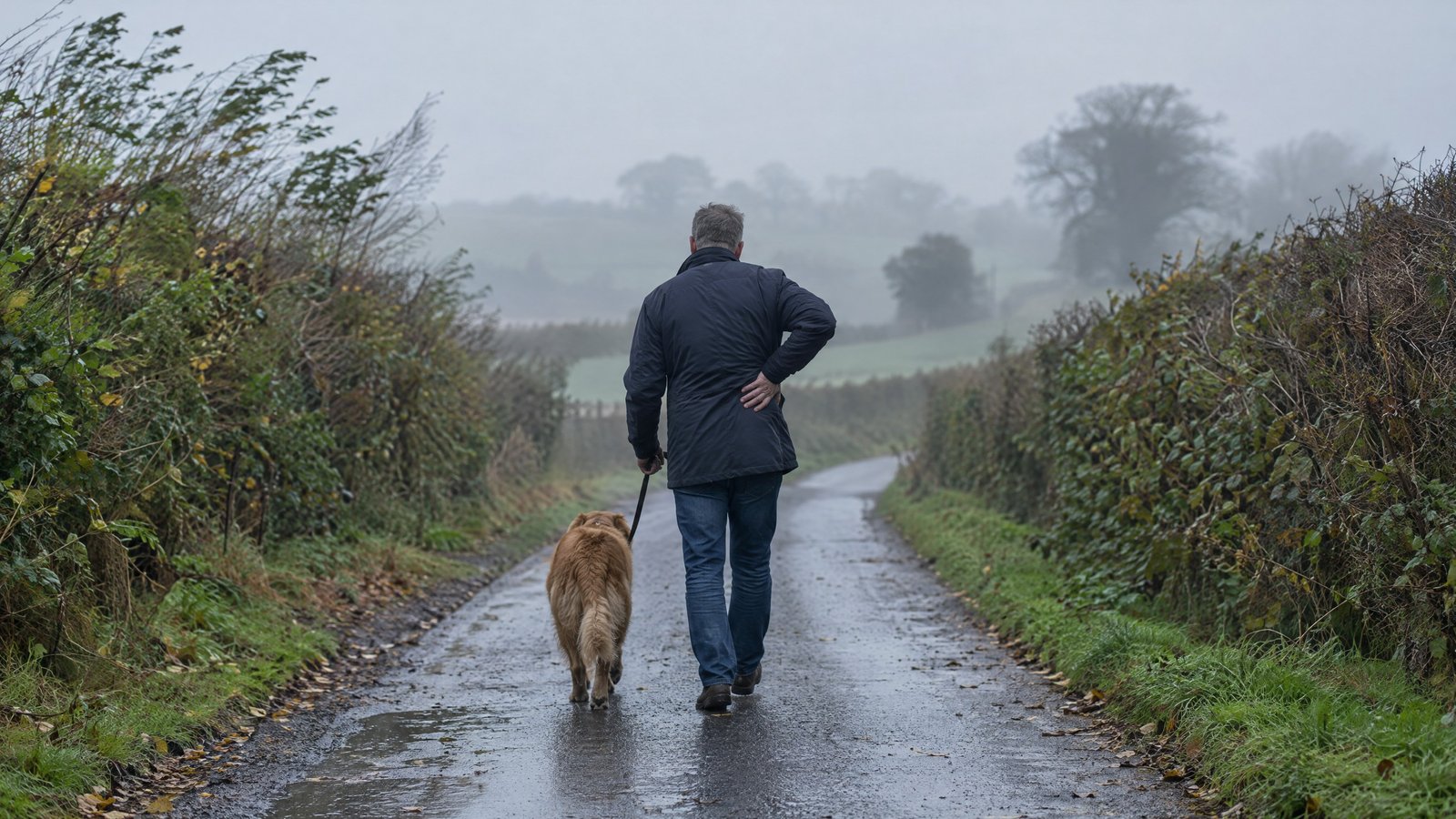
The clocks have gone back, you're scraping the car in the dark, and your back has started grumbling the way it does every winter. Most people blame the cold. The research says it's usually something else, and that's good news, because the something else is in your hands.
It isn't the cold itself
A 2024 review pulled together 11 studies covering more than 15,000 people. Temperature, rain, humidity and air pressure showed no link with low back pain starting or flaring up.
The biggest UK study, run by the University of Manchester, tracked 2,658 people's pain against the weather every day. Cold and rain made no difference. Damp, windy, low-pressure days gave pain a small nudge, but only a small one.
So your back isn't imagining it. The cold just isn't the main reason.
What actually changes in winter
Your routine. If the evening walk stopped when the nights drew in, or you're spending more time on the sofa, your back is doing less of what keeps it strong. Look at your own week and you'll often find the change there.
Your mood and sleep. In the Manchester study, the odds of a bad pain day were about four times higher on days when people's mood was low. Your pain system works a bit like an alarm. Darker days, poor sleep and a busy run-up to Christmas can turn the volume up without anything new being damaged.
Cold mornings. Cold does make muscle stiffer. That's been shown in the lab. It's why you can feel stiff first thing and loosen up once you're moving. Uncomfortable, but not the reason your back keeps flaring.
How much spare room your back has. This is the big one. If a damp week or a few less active days is enough to tip your back over, it's telling you it's coping, but only just. Any small extra load sets it off. And the sore spot often isn't the problem. If your hips or upper back are stiff or weak, your lower back picks up the extra work, and that's the bit that complains.
What to do about it this winter
Replace what you've lost, don't just lose it. If the evening walk has gone, swap it for a lunchtime walk, ten minutes on a bike, or a class. Keeping your total movement up matters more than what form it takes.
Warm up before the cold jobs. Scraping the car, clearing leaves, the school run. Two minutes of marching on the spot and gentle hip and back movements before you go out takes the edge off morning stiffness.
Use heat. A heat pack or hot water bottle wrapped in a tea towel can ease stiffness and spasm, and one small trial found a heat wrap eased recent back pain faster than a dummy pill. It makes moving easier, and moving is what helps.
Check your week before you blame the weather. Bad sleep, a deadline, a lot of sitting? That's usually the better clue, and the thing you can change.
Take your vitamin D, for your bones. We make very little from sunlight between October and early March, so the NHS says everyone should consider 10 micrograms a day in autumn and winter. Just don't expect it to fix your back. In proper trials it hasn't reliably reduced back pain, and I couldn't find any trial showing calcium or vitamin D3 with K2 does either.
Three signs it's more than winter
- It hurts on the mild, dry days too.
- It's lasted more than a few weeks, or it comes back every winter.
- It's spreading into your buttock or down your leg.
If any of those sound familiar, it's worth finding out what's really going on.
Build the spare room back
The good news is that spare room can be measured, and it can be built. When you come in, we look at the whole picture, not just the sore spot: how your hips, back and the rest of you share the load, what's strong and what isn't. You leave with a straight answer on what's driving your pain, a clear plan, and numbers we can retest as you get stronger.
If your back seems to know winter's coming before you do, you don't have to wait for spring. Call us on 01638 724042 or book your assessment online.