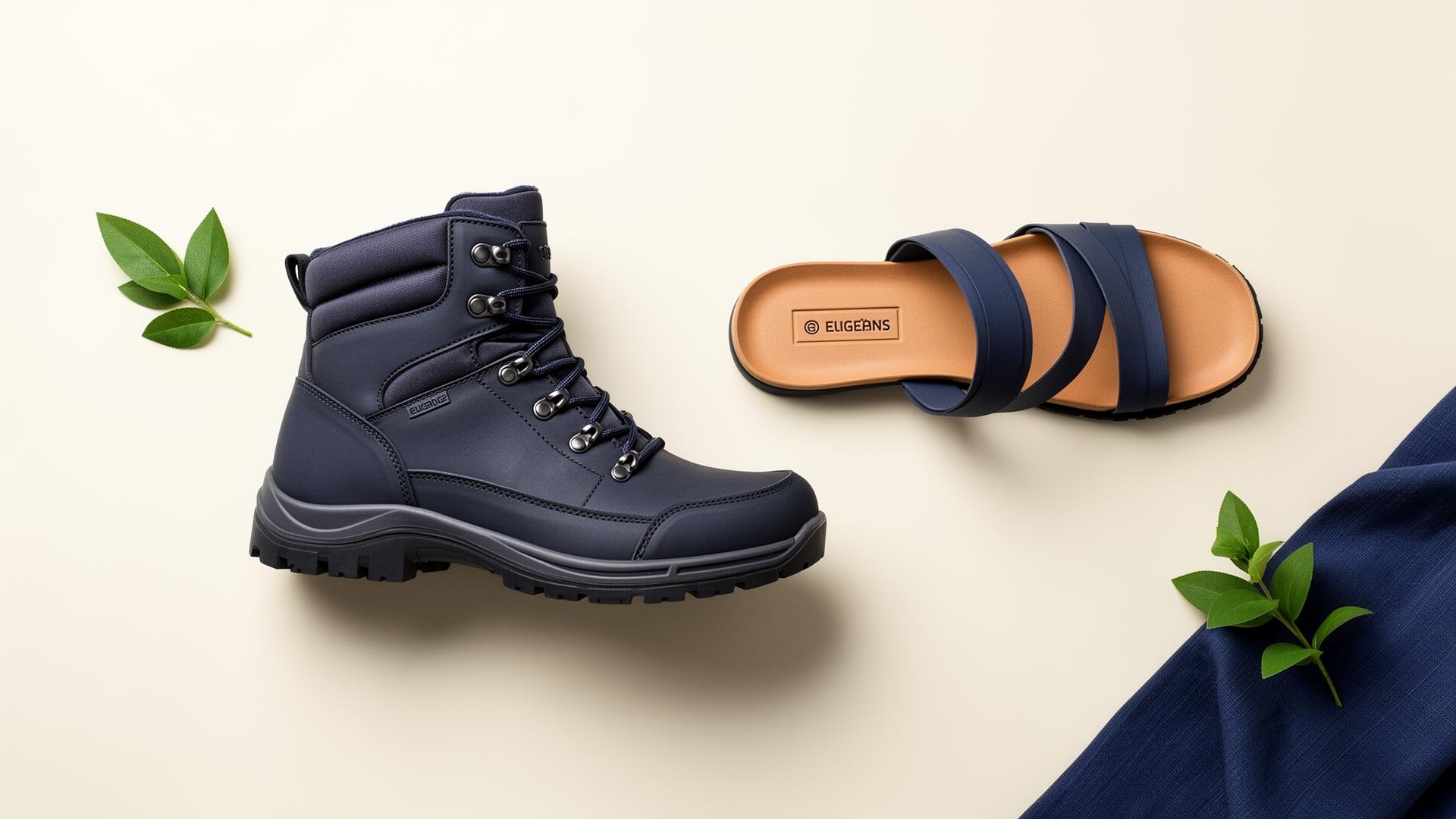
Every June we see the same thing walk through the door. Not a dramatic injury. Not a fall. Just a foot, an ankle, sometimes a knee or a lower back, that has quietly started to complain. The person is usually puzzled, because nothing happened. They did not twist it, trip on it, or overdo a session. All they did was change their shoes.
That is the part most people miss. The change of season is also a change of footwear, and your feet feel it long before you consciously do.
Your feet spend winter in a cast
For roughly half the year, most of us live in supportive, cushioned, slightly heeled shoes. Walking boots, trainers, work shoes, anything with structure. That support is comfortable, but it also does a lot of the work your foot is designed to do itself. The arch is held. The heel is raised and padded. The ankle is steadied. Spend six months in that, and the small stabilising muscles of the foot and lower leg get used to being passengers.
Then the weather turns. Out come the flat sandals, the flip-flops, the canvas pumps with no support at all, and for a growing number of people, barefoot or minimalist shoes. Overnight, the foot is asked to do everything it has not had to do since last summer. The arch has to support itself. The calf and Achilles have to work through a longer range. The toes have to grip and balance.
It is the equivalent of taking a cast off a limb and going straight back to full activity. The structure is there, but the conditioning is not.
Small overload, real injuries
When a foot that has been supported all winter is suddenly unsupported, the load does not disappear. It just moves to whatever tissue is least prepared for it. That is where the familiar early-summer injuries come from.
Plantar fasciitis. The classic one. Flat, unsupportive summer shoes increase the strain on the plantar fascia, the thick band along the sole of your foot. The tell-tale sign is sharp heel pain with the first few steps in the morning, easing as you warm up, then returning after a period of sitting.
Achilles tendon pain. Going from a slightly heeled winter shoe to a completely flat sandal lengthens the demand on the Achilles and calf with no transition period. The tendon protests, usually as stiffness and a dull ache low down at the back of the heel.
Ankle and outer-foot strain. Flip-flops in particular change how you walk. You claw your toes to keep them on, your stride shortens, and the muscles on the outside of the lower leg and foot end up overworking to keep you stable.
Here is the bit that matters for a clinic like ours, where so much of our work is spinal and whole-chain. Your feet are the foundation of everything above them. When the foot collapses, over-pronates, or stops absorbing shock properly, that change travels up. The knee rotates slightly inwards. The hip and pelvis adjust to compensate. The lower back picks up the slack. We regularly see people who arrive convinced they have a knee or back problem, when the real driver started two storeys down, at the foot, the week they changed their shoes.
This is also the season people increase their activity. Lighter evenings, the first proper runs of the year, long walks on holiday, gardening, festivals, days on your feet. A foot that is under-prepared and a sudden jump in mileage is a combination we could set our watch by.
Transition the footwear, do not flip a switch
The good news is that none of this means you have to give up your sandals or your barefoot shoes. It means treating the change of footwear the way you would treat any change in training load. Gradually, and with a bit of preparation.
Phase the change in. Do not go from supportive trainers on Monday to all-day flat sandals on Tuesday. Wear the less supportive footwear for an hour or two at first, on days you are not also clocking up high mileage, and build from there over two to three weeks.
Earn your barefoot or minimalist shoes. Minimalist footwear can be excellent for foot strength, but it is a destination, not a starting point. The people who get injured are almost always the ones who bought them and wore them straight to a 5k. Build up the time on your feet in them slowly.
Wake the foot up. A few minutes of simple foot and calf work makes a real difference: calf raises, toe spreads, picking up a towel with your toes, balancing on one leg while you brush your teeth. You are reminding muscles that have been off duty all winter that they are back on the team.
Respect the load, not just the shoe. If you are also ramping up walking or running, do not change the footwear and the mileage in the same week. Change one thing at a time so that if something does flare, you know what caused it.
Do not push through sharp or morning heel pain. Stiffness that eases as you move is usually manageable. Sharp pain, pain that is worse first thing, or pain that is creeping up the chain into the knee or back is the point to get it looked at, not to wait and see.
We can see exactly what is happening
This is where we differ from being told to simply rest it and buy an insole. When someone comes in with early-summer foot or ankle pain, we are not guessing. Our approach is root-cause, not symptom management, and we have the tools to back that up.
Our diagnostic ultrasound scanning lets us look directly at the plantar fascia, the Achilles and the surrounding soft tissue in real time, in the clinic, on the same visit. We can see whether a tendon is genuinely inflamed or thickened, rather than treating a label. And because so much foot and ankle pain is really a whole-chain problem, we assess how the foot is loading the knee, hip and back above it, so we treat the cause and not just the sorest spot. That is the difference between a problem that settles in a couple of weeks and one that keeps coming back every summer.
Get ahead of it
If you have already made the switch and your feet are letting you know about it, do not spend the summer working around it and hoping it fades. Early foot and ankle problems are some of the most treatable things we see, precisely because we can find the real driver quickly and give you a clear plan.
Book an assessment with us at BodyCare. We will scan it, work out exactly what is overloaded and why, look at the whole chain from the foot up, and get you back to the walks, the runs and the summer you actually wanted. Your feet have carried you through winter. Let us make sure they carry you through summer too.