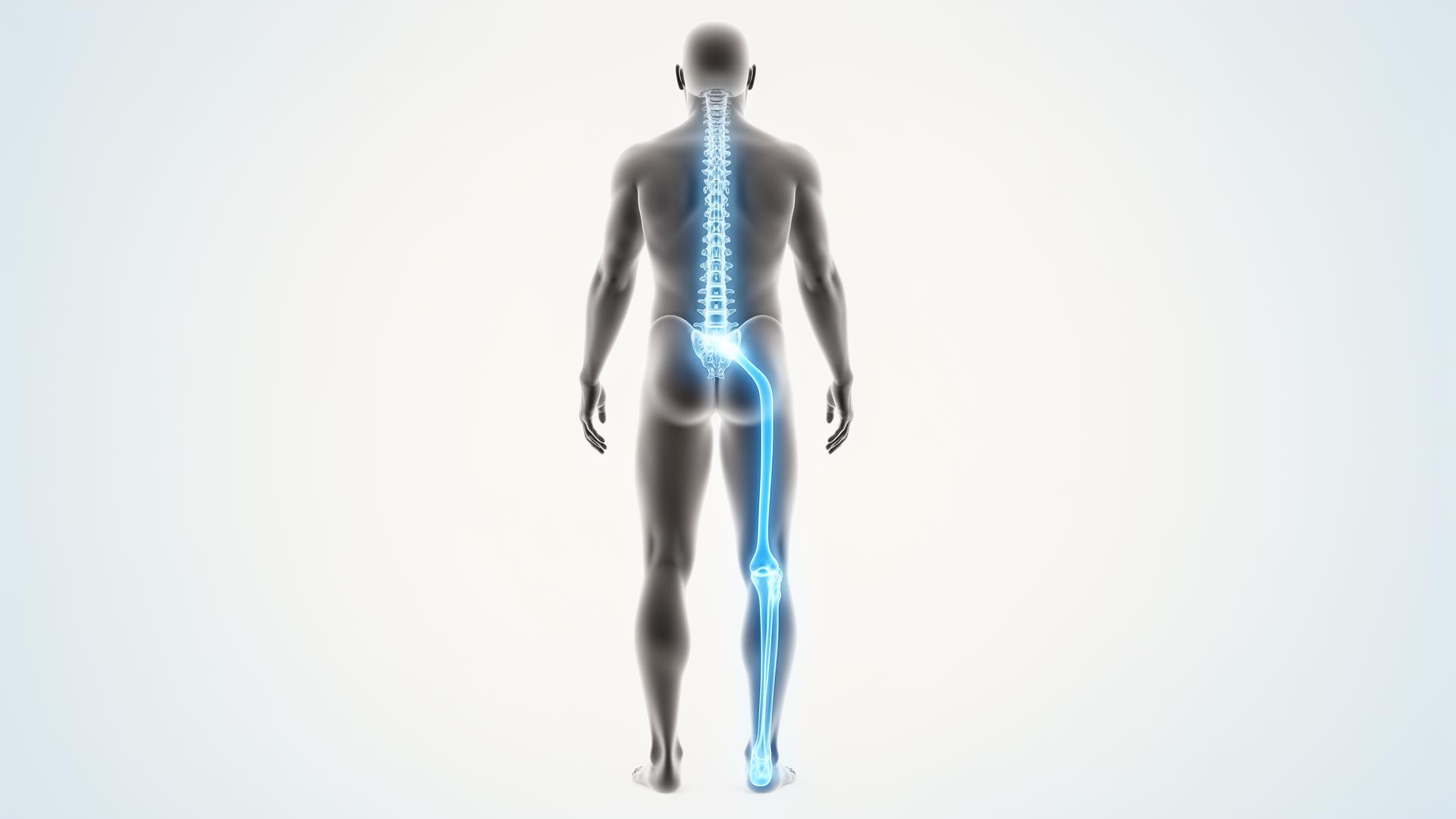
Sciatica is one of the most misused words in healthcare. People get told they have sciatica the way they get told they have a "bad back", as if it's a condition all of its own. It isn't. Sciatica is a symptom, not a diagnosis. Until you understand what's actually causing it, you can spend years treating the wrong thing.
Sciatica Is a Symptom, Not a Condition
The sciatic nerve is the longest nerve in the body. It forms from a bundle of nerve roots in the lower back (L4 to S3), runs through the buttock, down the back of the thigh, behind the knee, and into the foot.
When something irritates or compresses any of those nerve roots, you can feel pain, tingling, numbness, or weakness anywhere along that pathway. That set of symptoms is what we call sciatica. The medical term is lumbar radiculopathy, which simply means nerve root pain in the lower back.
So sciatica isn't a diagnosis in itself. It's a description of what the pain is doing. The real diagnosis is whatever is irritating the nerve in the first place. And that bit matters far more than most people are told.
Typical features of true sciatica:
- Pain radiating from the lower back or buttock down one leg
- Leg pain that's often worse than the back pain itself
- A sharp, burning, or electric quality
- Numbness, tingling, or weakness in the leg or foot
- Pain that gets worse with sitting, bending forward, sneezing, or coughing
If your pain stops at the buttock and never travels down the leg, it usually isn't sciatica, even if it's been labelled that way for years.
What Actually Causes Sciatica?
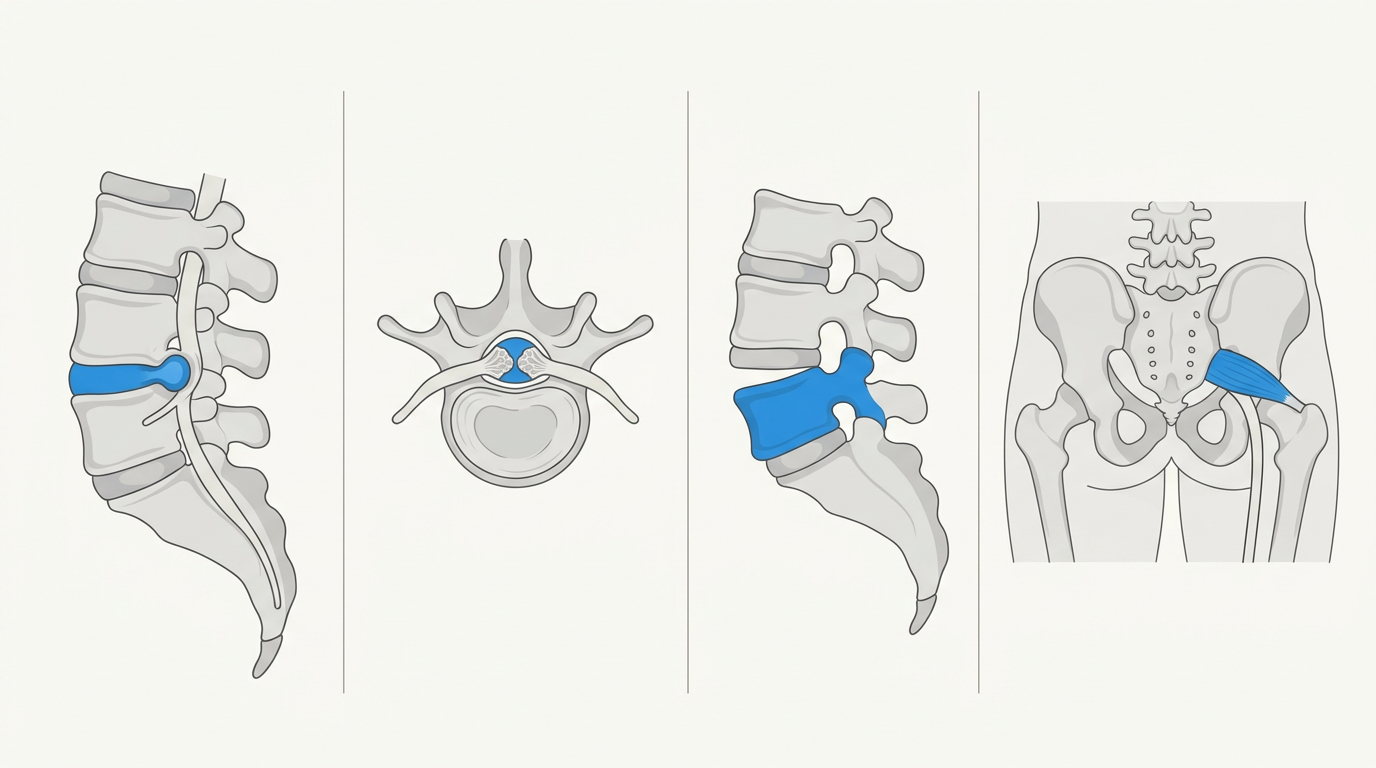
Current evidence points to a small number of structural causes. UK clinical guidance (NICE NG59) and the wider research literature consistently identify the same drivers.
Lumbar disc herniation
The most common cause by some distance. Around 85 to 90 percent of sciatica cases involve a disc that has bulged or herniated and pressed into a nerve root as it exits the spine. Often comes on after lifting, twisting, or a small movement that tips an already loaded disc over the edge.
Lumbar spinal stenosis
A narrowing of the spinal canal or the openings where nerve roots exit. More common in people over 60. Tends to cause leg pain that gets worse with standing or walking and eases when you sit down or bend forward.
Spondylolisthesis
A vertebra slips forward on the one beneath it, narrowing the space the nerve passes through. Often shows up after years of repeated loading through the lower back.
Piriformis syndrome (deep gluteal syndrome)
The piriformis is a small muscle deep in the buttock. The sciatic nerve runs underneath it (and in some people, straight through it). When the piriformis is tight or in spasm, it can compress the nerve and produce sciatic-type symptoms. This isn't a disc problem and it won't respond to disc-focused treatment. Frequently missed.
Less common causes
Sacroiliac joint dysfunction, facet joint irritation, pregnancy-related nerve compression, and rarely, more serious causes such as tumours, infection, or fracture. Uncommon, but a reason proper assessment matters.
Why Diagnosis Is Everything
Treating sciatica without knowing the cause is like treating a fever without knowing whether it's flu, an infection, or appendicitis. The symptom looks the same. The treatment isn't.
Disc-related sciatica responds well to mechanical decompression, specific movement work, and graded loading. A piriformis-driven case responds to soft tissue work, hip mobility, and targeted strengthening. Stenosis needs a different approach again, focused on positions that open the spinal canal.
Get the diagnosis wrong and the treatment misses. The symptoms calm for a while because tissue is resilient, then they come back, because nothing about the underlying problem has changed. This is why we won't put hands on anyone at BodyCare without a proper assessment first. We need to know what's driving the symptoms before we treat them.
How We Treat Sciatica at BodyCare
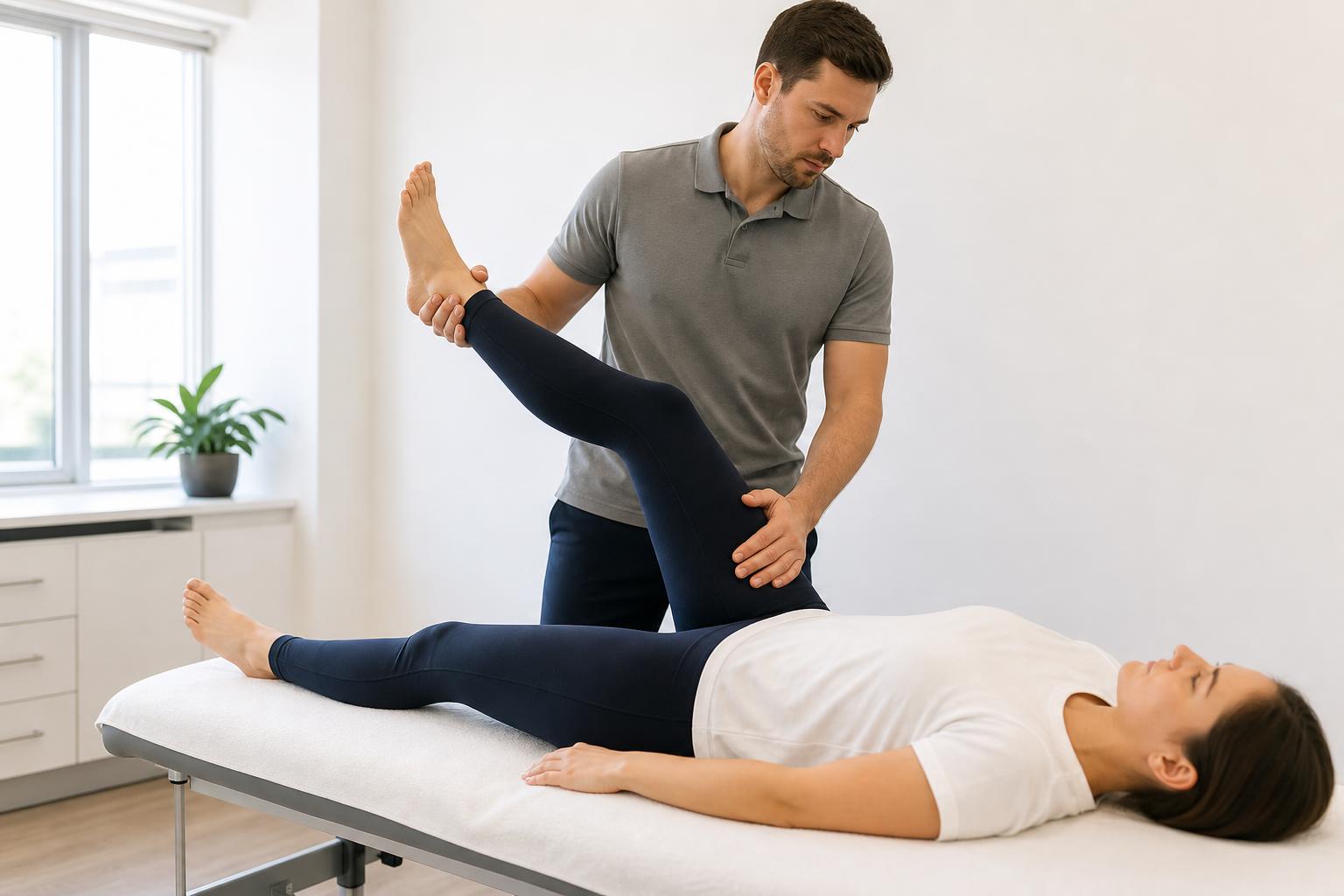
Every patient with suspected sciatica gets a full clinical assessment: history, neurological screening, movement and nerve tension testing, and where appropriate, referral for imaging.
For disc-related sciatica, IDD Therapy is often the primary treatment. It uses controlled, computer-targeted decompression to take pressure off the affected disc and create space around the nerve root, giving the tissue the environment it needs to settle. It's a more precise alternative to traction or manipulation, and it's particularly effective for the disc cases that haven't responded to other treatment.
For piriformis-driven, joint-related, or postural causes, we combine soft tissue work, manual therapy, and progressive strengthening of the hip, glutes, and core. The aim isn't just to switch the pain off. It's to address the mechanical reason it started, so it doesn't keep coming back.
Read more about our approach to sciatica and how we work out what's actually causing yours.
When to Get Sciatica Properly Assessed
Get it looked at if:
- You've had pain travelling down your leg for more than a couple of weeks
- It keeps coming back
- You have any numbness, tingling, or weakness in the leg or foot
- It's interfering with sleep, work, or training
Seek urgent medical attention if you have any loss of bowel or bladder control, numbness around the saddle area (inner thighs, groin, buttocks), sexual dysfunction, or rapidly worsening leg weakness. These can be signs of cauda equina syndrome, a rare but serious condition that needs same-day assessment at A&E.
For everything else, the sooner you have it properly diagnosed, the sooner the right treatment can start.
Book a sciatica assessment at BodyCare →
We're based in Kentford, Newmarket, and see patients with sciatica from across Newmarket, Cambridge, Bury St Edmunds, Ely, and Suffolk every week.
Related: Sciatica Treatment | IDD Therapy | Book an Assessment