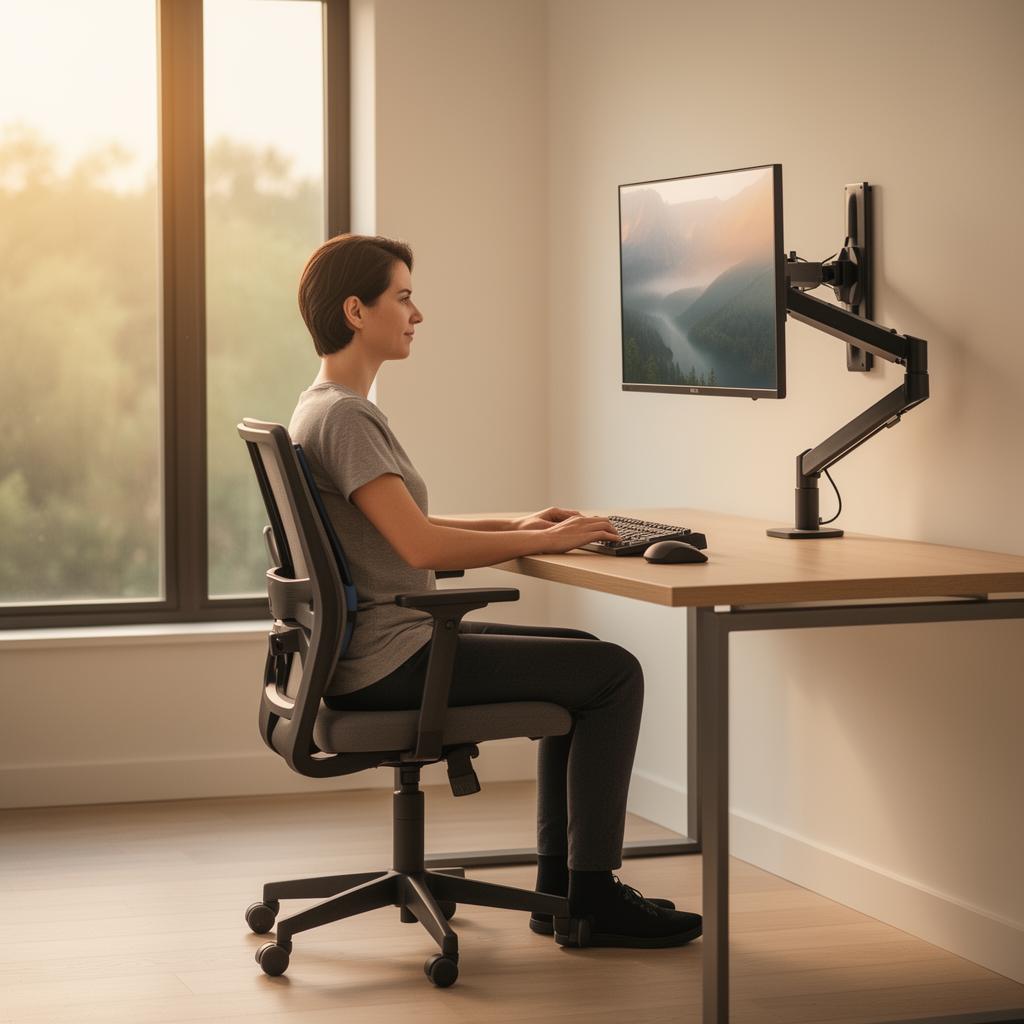
If you''re between 40 and 65 and work from home, the odds are stacked against your spine. Discs hold less water, postural muscles fatigue faster, and the kitchen table you''ve been using ''just for a few months'' has quietly turned into a four-year posture experiment. The good news: most home-office neck and back pain is mechanical — and mechanical problems have mechanical fixes.
At our Newmarket clinic we see this every week. Below is the exact setup we coach patients through, written for UK homes and real living rooms — not glossy ergonomic catalogues.
The Three Critical Measurements
Forget gadgets. Get these three numbers right and you''ll resolve 80% of desk-related pain.
1. Screen Height
The top of your monitor should sit roughly level with your eyebrows, an arm''s length away. When the screen is too low — which is true for almost every laptop user — your head drifts forward. Every 2.5 cm of forward head posture adds about 4.5 kg of load on the muscles at the base of your neck. Hold that for six hours and you have your headaches, your shoulder knots, and your 4pm fog.
Quick fix: stack two reams of A4 paper or a couple of hardback books under the laptop, then add a separate USB keyboard and mouse. Total cost: about £25.
2. Elbow Height
Sit tall. Your elbows should bend at roughly 90°, forearms parallel to the floor, wrists straight — not bent up to reach a high desk or drooping down to a low one. If your shoulders are creeping toward your ears, your desk is too high. If you''re slumping to reach the keys, it''s too low.
Quick fix: adjust the chair first, the desk second. If the chair won''t go high enough, add a firm cushion and use a footrest (a closed laptop box works).
3. Torso Position
Hips slightly higher than knees, feet flat on the floor (or a footrest), lower back supported by the chair or a rolled towel. Your ribs should stack over your pelvis — not collapsed forward into a C-shape. This single change takes huge load off the lumbar discs that, after 40, are simply less forgiving than they used to be.
The Chair
You don''t need a £900 Herman Miller. You need a chair that lets you sit with feet flat, knees at 90°, and a backrest that touches your lower back. A £40 lumbar roll on a dining chair will outperform an expensive chair used badly.
What to avoid for long working sessions: sofas, kitchen stools, bar chairs, and beds. They feel comfortable for 20 minutes and punish you for the next 20 years.
Movement Breaks — The Non-Negotiable
The best posture is the next one. Tissues in the 40–65 age range stiffen quickly when held still. You need to interrupt sitting every 30 minutes — not every two hours.
- Stand up and walk for 60 seconds (to the kettle counts).
- Roll your shoulders backwards 10 times.
- Look up at the ceiling for 10 seconds to reverse forward head posture.
Set a recurring 30-minute timer. This one habit reduces clinic visits more than any chair upgrade we''ve ever recommended.
Three Stretches To Do Daily
- Chin tucks (10 reps): gently draw your chin straight back, as if making a double chin. Resets the deep neck flexors.
- Doorway pec stretch (30s each side): forearm on the door frame at shoulder height, step through. Opens chest muscles tightened by typing.
- Seated cat-cow (10 reps): arch and round your lower back in the chair. Mobilises lumbar discs without floor work.
Your At-Home Self-Checklist
Walk to your desk right now and check off each item honestly:
- ☐ Top of screen at eyebrow level, arm''s length away
- ☐ Separate keyboard and mouse (not laptop only)
- ☐ Elbows at 90°, wrists straight
- ☐ Feet flat on floor or footrest
- ☐ Hips slightly higher than knees
- ☐ Lower back supported (chair or rolled towel)
- ☐ 30-minute movement timer set on phone
- ☐ Water glass within reach (forces small position changes)
- ☐ Overhead light, not just screen glow (reduces neck craning)
- ☐ No work done from sofa or bed
Fewer than 7 ticks is the threshold where we typically start to see referred neck or low-back pain. Fix the missing items this week, not next month.
When To Stop Self-Managing
If pain wakes you at night, refers down an arm or leg, or hasn''t shifted within two weeks of a corrected setup, the cause is no longer just your desk. That''s the point to get assessed properly — before compensations and disc irritation become the new normal.
We diagnose and treat work-related neck and back pain every day at our Newmarket clinic. See our full sports injury and MSK services, or book a consultation directly and we''ll put together a recovery plan built around your actual workstation, not a textbook one.